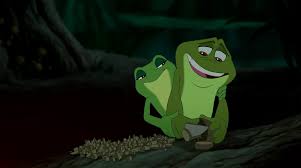
Now that I have two children accepted into colleges of their choice, I, like many of you, have rehearsed over and over again, “Remember, you’re not trying to get into the BEST school, but instead, you want to apply to schools that are the BEST fit! I’m grateful both my children are mature enough to understand that they will have to  figure out whether their choice of university is the “best fit” for them personally throughout their entire college experience. Even with such a vague definition of “best fit” for them to perform well enough in high school to be accepted into college and even with “sage” parents in the Education field, the Race to Nowhere continues the longstanding tradition all the way through college. My daughter, now a senior at Duke, writes a terrific blog (wordsofhope.com), a small part of which exposes the harsh, psychological realities of living in an environment that has no clue it is even on the treadmill, selling the treadmill, recruiting students who only know how to run the treadmill. We were talking about my former blog post about frogs (please read if you haven’t), and she dropped a bombshell… well, actually,
  it was just a pithy statement I wanted to use as inspiration for this post. She simply said, “Dad, college success is 80% documenting your past, present and future and 20% learning.” I asked her what she meant, and here are the nuggets of our conversation.
Documenting Your Past?
I didn’t understand what she meant to “document your past,” but I wanted to see into the psyche of a rising college senior who purports, like most students her age, to know it all. Hope (that’s my daughter), told me that since she’s arrived on campus, she has had to make sure she can personally document what others consider necessary for success or inclusion. She’s had to go back and get her former recommendation writers to fill out even more paper work guaranteeing that her resumé is “legit for when [she applies] to all the clubs, programs majors, etc.” She’s had to prove her interest to be included in student organizations and living situations by handing over archives and artifacts and documents and assessments of her opinions and lifestyle. She’s had to show professors and administrators her transcript containing very high grades in two UPPER-LEVEL Spanish classes from another quite prestigious and very competitive university. This was for not for admissions but for professors and administrators in order to be eligible for classes and study-abroad opportunities. Thank goodness she just happened to order several copies of the two-course transcript “just in case” or she would have missed deadlines to go to Spain. Of course, she is my first-born, and, even better,  an amazing progeny of my wife. She possesses everything and anything necessary to organize, locate and/or “document” important events. If she needs it, she has it… stored or saved somewhere!
Documenting Your Present?
What? At college, aren’t we by default documenting everything we do? According to my daughter…. NO! In order to be “successful” in today’s “competitive” academic institutions, it is no longer enough to be there “just to learn.” Everything one does on the campus must have a tie to some future payoff, some trajectory, some nebulous trail of completing two majors, two minors, a certificate, graduating with honors, making the Dean’s list and much, much, more. Hope provided me with amazing examples. Students document the worst professors, the hardest classes, the easiest A on campus, and much more, thanks to social media. This, in turn, informs students to take classes in strategic ways so that they can get the easiest A on campus and, hence, the highest GPA. With proper documentation, students strategically delay taking the “harder course that makes one work for an A” and purposely matriculate in an “easier university” during the summer.  Many universities allow such “transfer” simply because they do not offer (those strategically avoided) required core courses in the summer. “Who cares about learning and joy, I must get the highest GPA!” Scurrying for a 4.0 is like running a sprint with “record time” but with no finish line in front.
In the present, students must be savvy to organize and document any,  and I mean any interaction or accomplishment or achievement they have done or are in the process of doing, in real time, because the race to nowhere throws students off the treadmill if they have not proven themselves or they cannot prove themselves in an instant. The only defense that one measures up is to have documentation of one’s personal value… and to present it to someone who values those documented credentials. So much for the joy of learning!
Documenting Your Future?
Quite similar to any institution of higher learning, the moment students secure some reputable internship or learning opportunity, they immediately push the “accelerate” button on the treadmill. They consider their achievement as helping them “stand apart” from other students, inflating their own egos and resumés, reinforcing the desire to keep running the Nowhere Race. Running faster means you document your future internship and then run even faster to the scholarship application process to make sure you get a reputably named scholarship to fund your travel, expenses, and in some cases, even the internship itself. You see, the scholarship is not just a way to help students financially, but it is another notch in the CV, another resumé-building activity that has no planned end to the construction. In my own sardonic perspective, students won’t wipe a dog’s nose if it doesn’t have a slot on their resumé! For AMAZING ideas to help students think about learning and their own interests, I recommend Katharine Brook’s book You Majored in What?
20% Learning?
Ultimately, Hope concluded that 20% of her time is devoted to studying, applying what she has learned, learning above and beyond what is being delivered in the classroom.  Her study and organizational skills make her successful in that area, but, since so many are on the race to nowhere, she feels inferior with an A-! She feels helpless when she compares herself with other “runners” in the race. She loses focus and sight of what brings her joy and what she is designed to do and be! What charges her? Knowing she has something more to contribute to the world to make it a better place, to share with others and grow from a community of other altruistic heroes! What charges most Nowhere racers? Getting the prize before someone else! I can’t help but picture them running and narcissistically hogging the treadmill rails, making it harder for others to run ahead, blocking access for others to “succeed.” I really like this metaphor stuff!
Am I Whining? Isn’t This Just Competitive Academia?
 In short, YES! I’m whining! Yes, this is the norm for anyone who needs to or wants to “get ahead.” And, yes, in many or most cases, “ahead” is enough to become another one-percenter! But, remember my son? He, too, has been accepted into an amazing institution of higher learning. And I fear for him! I truly believe it is THE BEST FIT for him! But, the apple does not fall far from the tree! My son LOVES being! Not doing…! He is present in the moments he deems important or meaningful… which are many but not necessarily traditionally academic! He applied to this university bravely revealing his true self in the application process: academic prowess, stellar community-building skills, intellectual curiosity, independent thinking and… yes… overcoming learning differences that make it difficult to “run their (traditional) race their (traditional) way.” They graciously accepted him. He loves learning and soaks up more than the average information dump… But, he does not document his life…! Comically, he DOES document his experiences and relationships with Snap-whatever, or Insta-thingy! But he does not behave like he is on a treadmill winning the race to nowhere! He would
  rather make sure his friends are accompanying him, pulling them up to the front, where he will probably dwell most often merely due to his natural intellect without even knowing or caring that he is “winning.” Is this success? In the world of Race to Nowhere, turning around to help others succeed is a death sentence, a guarantee you will “get behind” or “get left behind.” Will my son have to metamorphose into something he is not merely to “succeed” at his university? He is mature enough to stay true to himself, but is he willing to document his whole life, taking him away from the things he loves and turning him into a competitive, arrogant, scheming, superficial monster? Will this university pose the same challenge/definition of success, upholding standards that don’t allow him and many others to demonstrate their learning? I’m afraid I’m the one worrying about this… which may be evidence that I am part of the problem and not part of the solution, that I want my son to “fit in” and “be successful” like everyone else. It may even mean I do not have faith that he will succeed if he doesn’t continue to go against his nature and run this pathetically exhausting and counterproductive race.
So, yes, I’m whining because I, like every parent, think my son is special.  He may surprise me and jump again into Nowhere Race Training with gusto, just as he had to do for 12 years to get into a school that might bring him joy and meaning. Eighteen years old is too late to change a child or an entire system of Education. I am hoping he will rise above the dehumanizing manner in which academic environments “compete.” I am praying he will remember how to take the knowledge he learns and turn it into wisdom, compassion and servant leadership. I so want him to succeed and be self-sufficient and happy. Perhaps going to college, whether the institution espouses the Race to Nowhere or not, really is about growing up, maturing and becoming comfortable with oneself in an ever-changing society while also learning a “cultured,” predetermined curriculum prepared by an institution of higher learning.
 Do any of you have advice for me? Insight into how to guard ourselves and our children from losing their humanity in this crazy treadmill Race to Nowhere? I welcome your comments? I also offer you my own counsel if you so need. Together, we can learn!









 I forget the difference.
  Anyway, the tadpoles in the eggs grow, they develop, they hatch… into the water. Again, they grow, they develop, they absorb their tails and climb OUT of the water. They know the water! They jump into it. They play in it! They procreate in it! They know how to USE the water for their own good, but, their expertise of water comes from having lived IN it and having looked AT it from dry land.
  Their perspective from the water is just as valuable as their perspective from dry land.
  Their goal in life is NOT to stay in the water thinking that the water brought them out of the eggs and gave them a pretty good life with a tail. Their goal is not to look incessantly for more water, better water, or the water most popular with all the other frogs! In fact, without the perspective of stepping out on dry land, the frogs would never know how to distinguish better water. They would not be able to respect those who have come from different waters. They would not even know that more water existed, and they certainly wouldn’t see that, in general, they are responsible to live their own life “happy,” not the life of other frogs. The distracting search for bluer water limits our capacity to grow into the frogs (or toads) we were meant to be. After all, a frog’s goal is “relationship” with other frogs in an exciting world into which we frogs may bravely step (or swim).
 Now, what does this have to do with My Education Education? Everything! Allow me to analogize. We Americans are born into a pond of free and democratic education. Like for tadpoles, our “eggs” are short-lived. They are called Kindergarten. Now, I wanted to say “the Elementary Grades Years,” but, truthfully, the innocent shell that protects young lives with humanitarian, humanistic “play” and natural, meaningful and authentic learning dissolves and breaks even EARLIER than Kindergarten. That is, the “baby tadpoles” have very little time to “develop” their “tadpoleness” in the egg before the egg is shattered for more “water”- the water of Outcomes Based Education, or “academic readiness,” or “customized curriculum” or higher ERB scores. Our tadpoles stay too briefly in the haven of “play is our work.” In the short-lived life in their shell, our children must learn what it means to play TOGETHER, to play SAFELY, to play ALONE, to SHARE, and many more things that seem like natural human behaviors for which any curriculum of their interest is a secondary excuse. Teachers and “better waters” will not ever be able to “dump” these kinds of lessons into children in such a short time!
 So human tadpoles are pushed into the water (and out of their shells) way too soon and are literally and figuratively flooded with more and different and “better” water: the next trend in Education promising the get the youngster “ahead.” Parents are told this new water is better. Their children will swim to the front of the pack if they just drink from the chalice of this next curricular or extracurricular panacea!
  And only the tadpoles at the front of the pack get to jump into the next best body of water, where the population of tadpoles is smaller and more “competitive.” This poses a threat to parents, as the tadpoles in this new body of water can all swim as fast as or faster than their own children. And so, parents help the tadpoles find more water to jump into, to “distinguish” their children from the others at the front of that pack. Some push the tadpoles to do sports, music, online classes, tutoring, “enrichment,” and more. So, our tadpoles never learn the world of any body of water because we parents are trying to push them through and out of one body into the “next best.” And then, by the time parents figure out their tadpoles are just like the other tadpoles even though their children had worked so hard at standing out, the tadpoles begin to lose their tails!
 If you know anything about these creatures-adolescent tadpoles, that is- they stop eating and literally digest their own tails while they “go through the changes.”
  So, in reality, adolescent tadpoles actually ignore the water in which they live and focus on “more important” issues. (Wouldn’t it be nice to navigate through FAMILIAR waters during this period instead of hopping into new waters every 3 to 6 months? In Middle School, we may as well say the same thing. Middle Schoolers stop feeding on the “water” of Education and focus on what they were put on this planet to do: you fill in the blank here… individuate, move into Formal Operations Thinking, pick at their acne, develop a secure identity, etc. Whatever it is, adolescent tadpoles need time to grow into their own bodies, lose their tails and connect with fellow tadpoles to muster the strength for their upcoming leap OUT of the water, physiologically able now to manage a bigger world with legs, breaking apparatus, new and stronger muscles, etc. Biologists say that it is usually hunger that drives a tadpole adolescent out of the water. Think about the “water” we humans dump on our adolescents, like drinking
  from a fire hydrant! More classes, more tutors, more “extra-curriculars,” camps, etc. How often do we even know if our children are “hungry” for the water we pour down their throats? And, by this time, some of our adolescents have become quite skilled at a few things- through practice, drill, opportunity, privilege, self-motivation, parental threat, etc.
  There may or may not be the joy of jumping into the water like a young adult frog experiences or even the sense that frogs can and should hang and swing with other frogs with joy and by nature, but at least our children can jump into some of the “better waters” better than other frogs. Suzuki violin, the School of Science and Math, UNC School for the Arts, Governor’s school, “gifted” programs, rounding out our resumé to be eligible for the “best” schools and scholarships! Some of our young adult frogs can play in some really awesome water where others can’t.
  And this pushes the parents and now the frog itself to seek out newer… but related… waters, a process which has now formed into such a rigid formula, neither froglings nor parents can see any other approach to going through life’s waters. You see, now, we don’t want to push the frog too much into new waters where she might get caught up in a relationship with the other frogs at that level, or, heaven forbid, she might disregard jumping into the other waters that now define her as “distinguished.” Pushing the young frog even harder distracts him until he can be pushed into the next best body of water. Ultimately, these frogs only know the waters because they have merely lived IN them. Without the perspective of living OUT of the waters, the only path of “life” for these frogs is to paddle in the water with a “select” group of other frogs who believe they are just as superior. Even though the analytic capacity is limited for the frogs who only live in/on the water, their own community of “fast paced” frogs considers them to be “the best.” At the very least, having a perspective outside the waters gives a frog a broader and more accurate assessment
  and analysis of self and the world. Remaining on the treadmill for so long sometimes makes the frog lift that special middle finger in rebellion to the very academics that the community believes will bring him the best success and say “that’s enough” or even worse!


 Dare we drop our guard, our pretense… and share? From pre-school to the finest of Ivy Leagues, we educators are ALL guilty of tuning the treadmill for the next wave of tadpoles! Which of we educators will be the first one to pull the plug!
 myeducationeducationdotcom